Choosing The Right Supplements
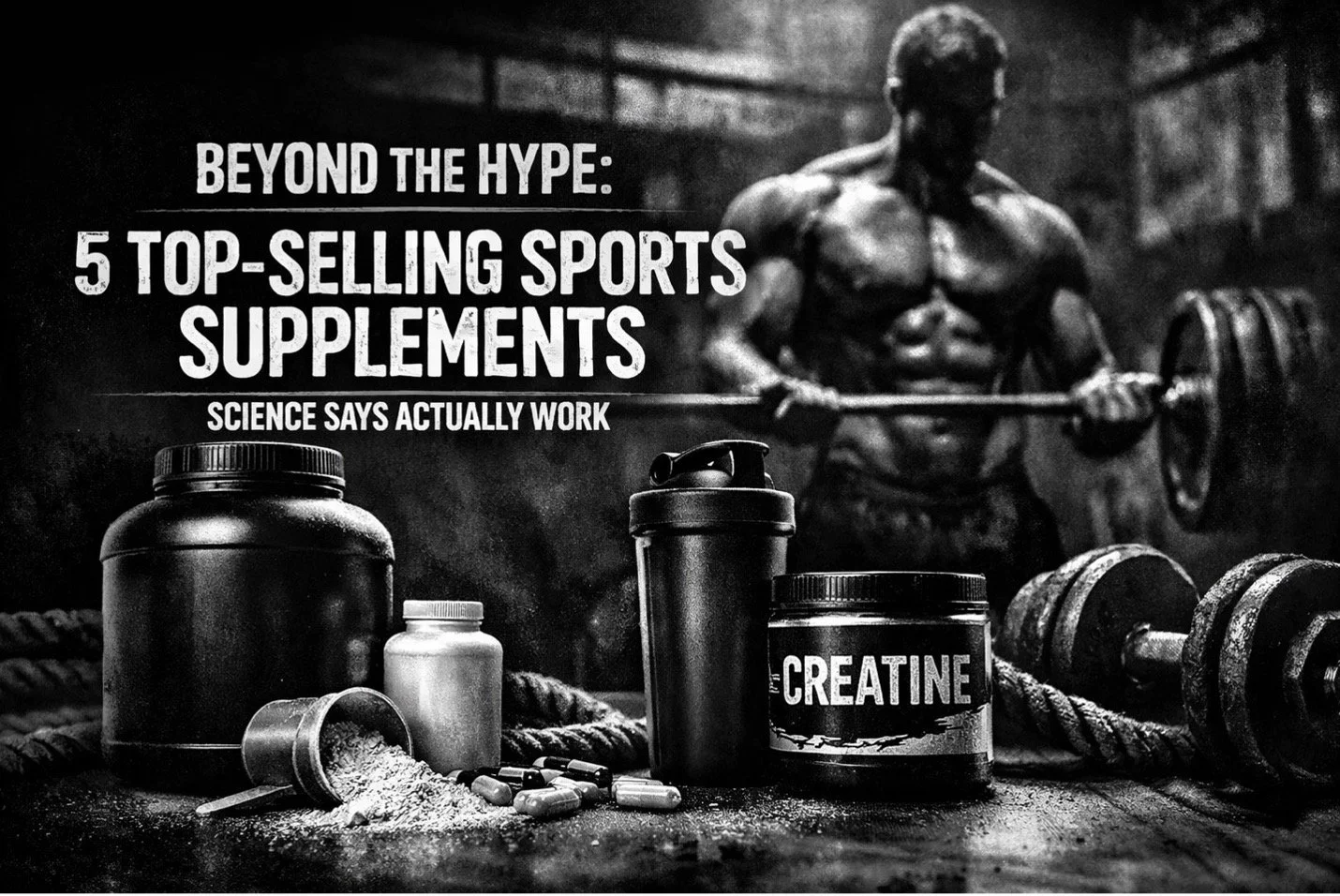
Walk into any supplement store, and you'll feel like you've entered a science fiction novel. Neon labels scream promises of instant gains, superhuman endurance, and muscle growth that defies biology. The supplement industry is worth billions, and everyone's got an opinion.
But here's the thing: most of it is marketing noise.
At WorkTime Athletic Performance, we're firm believers in a food-first approach. Real food should always be the foundation of your nutrition. But let's be honest, sometimes life gets messy, training demands increase, and strategic supplementation can fill the gaps where whole food falls short.
So let's cut through the BS. Here are the five top-selling sports supplements that actually have solid science behind them, no fairy dust, no proprietary blends, just evidence-based performance tools.
The WorkTime Philosophy: Food First, Supplements Second
Before we dive in, let's get one thing straight: supplements are exactly what they sound like, supplemental.
Whether you're grinding through powerlifting sessions at the gym or coaching youth athletes through their first strength program, your nutrition foundation matters more than any pill or powder. We've covered this extensively in our guide to food-first nutrition, but the quick version? Prioritize whole proteins, quality carbs, healthy fats, and micronutrient-dense foods.
That said, supplements can play a strategic role, especially for the over-40 athlete dealing with recovery challenges or the youth athlete with sky-high training demands. Let's talk about the ones worth your money.
1. Protein: The Strength Builder 💪
You knew this was coming. Protein supplementation is the most popular supplement among athletes for good reason; it works.
A comprehensive systematic review and network meta-analysis by Deng et al. (2025) found that protein supplementation significantly enhances muscular strength when combined with strength and conditioning training.1 We're talking measurable, reproducible results across multiple studies.
Why it works: Protein provides the amino acid building blocks your muscles need to repair and grow after training. Whether you're 45 years old, trying to maintain muscle mass, or a teenage athlete in the middle of a growth spurt, adequate protein is non-negotiable.
The catch: Most people can hit their protein targets through whole food. We've written in-depth about choosing the right protein sources and maximizing protein intake. But when you're training hard, traveling, or life gets chaotic? A quality protein supplement can bridge the gap.
WorkTime's take: Use it strategically. Not as a meal replacement, but as a tool when whole food isn't practical.
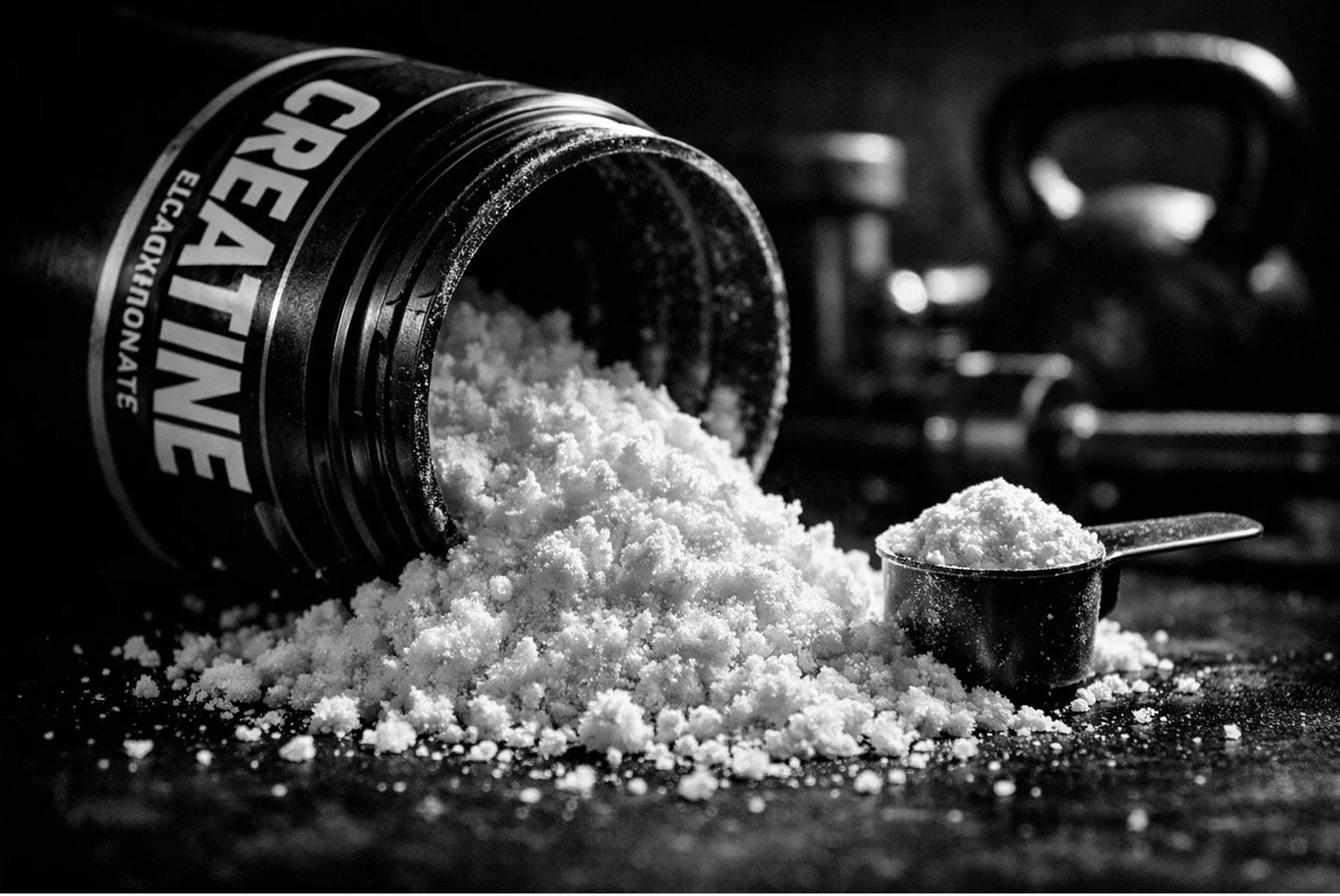
2. Creatine Monohydrate: The Power & Brain Booster 🧠
While protein is the most popular supplement, creatine is the most studied, and for good reason. It's one of the few supplements that consistently delivers on its promises.
Creatine works by increasing your body's stores of creatine-phosphate, which helps produce ATP (your cells' energy currency) during short, high-intensity efforts. Research shows creatine supplementation improves strength, power, and repeated sprint performance by 5-15% in responsive individuals.2
The same meta-analysis by Deng et al. (2025) confirmed that creatine significantly improves jump performance, crucial for boxing athletes working on explosive power and youth athletes developing an athletic foundation.1
The bonus: Emerging research suggests creatine may support cognitive function and brain health, making it particularly interesting for the over-40 crowd concerned with longevity.
How to use it: 3-5 grams daily. No loading phase needed. Mix it with water, coffee, or your post-workout shake. Simple.
WorkTime's take: Creatine is one of the few supplements we consistently recommend across demographics, from powerlifters to combat athletes to masters-age lifters.
3. Beta-Alanine: The Fatigue Fighter 🔥
Ever feel that burning sensation in your muscles during high-rep squats or extended rounds on the heavy bag? That's lactate accumulation and hydrogen ion buildup, the stuff that makes you want to quit.
Beta-alanine helps buffer that burn.
Yu and Ding (2025) found that beta-alanine demonstrates effectiveness for high-intensity athletic efforts, particularly in activities lasting 60–240 seconds.2 It improves jump performance, enhances training capacity for intense exercise, and shows strong results for repeated high-intensity movements.2
Translation: If your training involves repeated bursts of intense effort, think circuit training, boxing rounds, or CrossFit-style conditioning, beta-alanine can help you push harder for longer.
The tingling: Yes, you'll probably feel a harmless tingling sensation (called paresthesia) about 15-20 minutes after taking it. It's weird but temporary and totally safe.
Dosage: 3-6 grams daily, split into smaller doses to minimize tingling. Effects build over time, so consistency matters.
WorkTime's take: Great for athletes doing high-volume, high-intensity work. Less critical if you're focused purely on low-rep strength training.
4. Caffeine: The Performance Catalyst ☕
Let's be real: most of us already use this supplement. It's just usually in coffee form.
Caffeine is one of the most well-researched ergogenic aids available. It improves cognitive function, reduces perceived exertion, and enhances performance in both strength and endurance.
The beauty of caffeine is its versatility. Whether you're hitting a heavy deadlift session at the gym or grinding through conditioning work, caffeine can give you that extra edge.
The science: Caffeine works by blocking adenosine receptors in your brain, reducing fatigue signals and increasing alertness. It also enhances calcium release in muscle cells, potentially improving contractile force.
Strategic use: 3-6 mg per kilogram of body weight, taken 30-60 minutes before training. For a 180-pound athlete, that's roughly 250-450 mg: about 2-4 cups of coffee.
WorkTime's take: Use it strategically for key training sessions, not habitually for every workout. Your body adapts to caffeine quickly, so cycling your intake maintains its effectiveness.
Note: Caffeine is considered a stimulant. Certain sports organizations maintain strict limitations on the amount of caffeine athletes are allowed during competition.

5. Vitamin D: The Health Anchor ☀️
Here's where we shift from performance enhancement to foundational health: and this matters especially for Colorado athletes.
Vitamin D isn't just about bone health (though that's critical). It plays a role in immune function, muscle protein synthesis, testosterone production, and recovery. The problem? Most of us are deficient, especially in the winter months or at high altitude.
While vitamin D might not directly spike your squat numbers like creatine, it's essential for the foundational health that makes consistent training possible. For over-40 athletes and youth athletes alike, maintaining adequate vitamin D levels supports everything from immune resilience to hormonal balance.
Testing matters: Get your levels checked. Optimal ranges for athletes are typically 40-60 ng/mL, not the bare minimum.
Dosage: This varies wildly based on your baseline levels, but 2,000-4,000 IU daily is common for maintenance. Higher doses may be needed if you're deficient.
WorkTime's take: This is one supplement we recommend year-round for Colorado athletes. Our sunshine exposure is inconsistent, and deficiency is more common than you think.
Putting It All Together: The WorkTime Protocol
So how do these five supplements fit into a disciplined, evidence-based approach?
For the over-40 athlete: Prioritize whole food nutrition, then add protein, creatine, and vitamin D as your core stack. Use caffeine strategically for key training days and consider beta-alanine if your program includes high-intensity conditioning.
For youth athletes: Focus obsessively on food first. Add protein only if dietary intake consistently falls short (calculate this properly: we've got a guide for that). Creatine can be added once training age and consistency are established. Skip the pre-workouts and stimulants: developing athletes don't need that crutch.
The bottom line: These five supplements have actual science supporting them. They're not magic, but when combined with consistent training, quality sleep, and a food-first nutrition approach, they can provide measurable improvements.
Ready to Optimize Your Performance?
Whether you're looking for boxing gyms in Colorado Springs or a powerlifting-focused facility that emphasizes evidence-based training, WorkTime Athletic Performance combines disciplined programming with smart supplementation strategies.
We don't push products. We build athletes through intelligent training, proper nutrition, and strategic supplement use when appropriate. Come train with us and experience what happens when science meets discipline.
References:
Deng B, Yan R, He T, et al. Effects of different dietary supplements combined with conditioning training on muscle strength, jump performance, sprint speed, and muscle mass in athletes: a systematic review and network meta-analysis. Front Nutr. 2025;12:1636970.
Yu T, Ding C. Efficacy of dietary supplements on sports performance outcomes: a systematic review of evidence in elite athletes. Front Nutr. 2025;12:1675654.