What is Beta-Alanine, Why Does it Tingle, and How Can it Help Me?
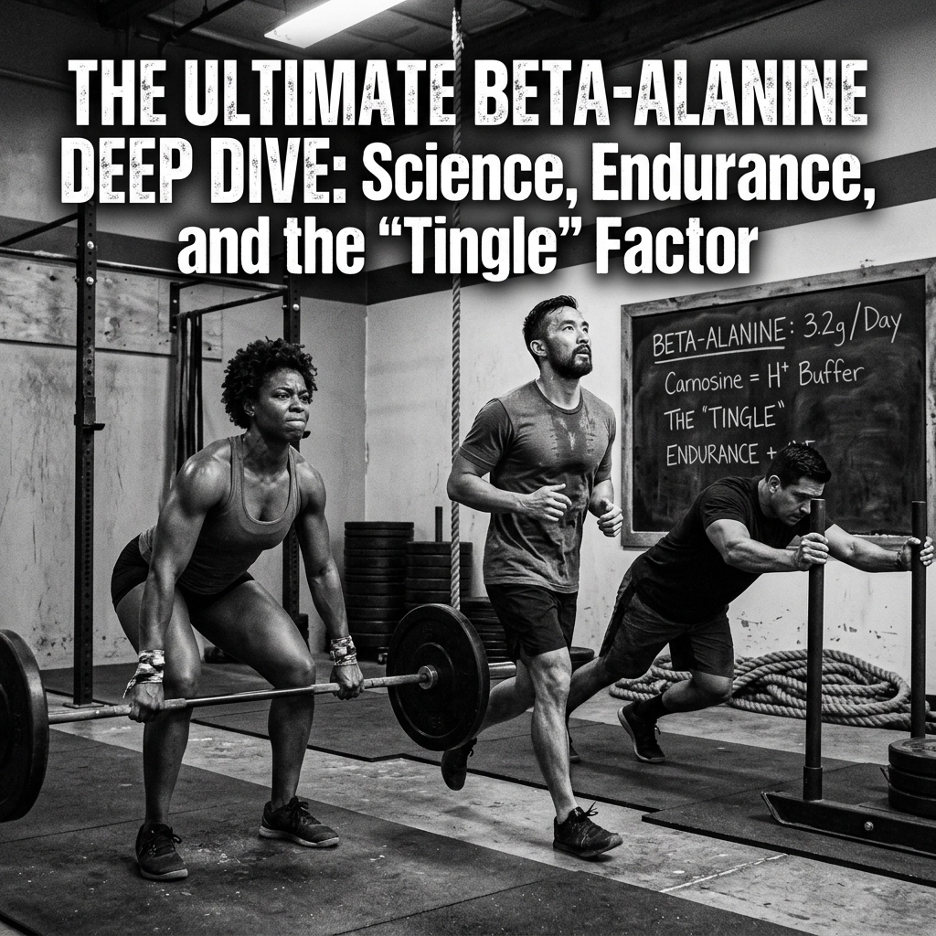
If you’ve ever taken a pre-workout and felt a prickling wave across your face, ears, or hands, you’ve already met beta-alanine. That sensation, called paresthesia, is why many athletes know the ingredient by feel before they know it by science. But the tingle is not the story. Performance is.
For our athletes training in Colorado Springs, that matters. Whether you’re putting in rounds at boxing gyms in Colorado Springs, sharpening your conditioning at MMA gyms in Colorado Springs, building work capacity at a powerlifting gym in Colorado Springs, or pushing hard intervals at a performance run gym, beta-alanine deserves a serious look. This is especially true for sports and training blocks that live in the uncomfortable middle ground: efforts that are too long to be purely ATP-PC dominant and too intense to stay comfortable aerobically.
This article is a full masterclass. No hype. No fairy dust. Just the facts, what beta-alanine does, what it does not do, who it helps most, how to dose it correctly, and where the research is strongest. If you want the disciplined, science-backed answer, you’re in the right place, so let’s get into it. [1],[2]
Introduction: The "Tingle" and Why It Matters for Colorado Springs Athletes
At WorkTime Athletic Performance, we coach athletes who need more than generic gym advice. A boxer needs to maintain punch rate and quality late in the rounds. An MMA athlete needs repeat-effort capacity through scrambles, clinch exchanges, and takedown attempts. A powerlifter may not care about a supplement unless it helps improve training volume, repeat-set quality, or fatigue resistance during hard accumulation phases.
That is where beta-alanine earns its place.
Unlike stimulants, beta-alanine does not work just because you feel it. In fact, the tingle has basically nothing to do with whether the supplement is helping your performance. The real benefit comes from what happens after repeated daily dosing, when muscle carnosine concentrations rise enough to improve buffering during high-intensity work. In practical terms, beta-alanine is most relevant for repeated bouts and sustained hard efforts where acidosis becomes part of the limiting factor. That makes it highly relevant for striking sports, combat sports, conditioning circuits, repeated sprint work, and higher-volume resistance training blocks.[2][3][4]
For our athletes, there is another practical point: if your sport punishes you when fatigue spikes, buffering matters. If your output drops off fast in later rounds, later sets, or later intervals, beta-alanine may be one of the few supplements with a real mechanistic case and meaningful sport-specific application. [5][6]

Mechanism of Action: Carnosine, H+ Buffering, and Why Fast-Twitch Fibers Care
To understand beta-alanine, you need to understand carnosine.
Carnosine is a dipeptide made from beta-alanine + histidine, and it is stored in high concentrations in skeletal muscle. Beta-alanine is the rate-limiting precursor for carnosine synthesis, which is why supplementing beta-alanine, not histidine, is the strategy used to raise intramuscular carnosine. [3][4][5]
So why do we care about carnosine?
During high-intensity exercise, especially work lasting roughly 30 seconds to several minutes, glycolytic flux increases and hydrogen ions (H+) accumulate. That rise in H+ contributes to a lower intramuscular pH. Once the muscle environment becomes more acidic, contractile function, enzyme behavior, and force production start to suffer. The result is familiar: the burn, the slowdown, and the drop-off in repeat effort quality. [4],[5],[6]
What carnosine does
Carnosine helps in several ways:
Intramuscular pH buffering: It helps buffer excess H+ ions, delaying the performance decline associated with acidosis. [4],[5],[6]
Calcium handling support: Research suggests carnosine may influence excitation-contraction coupling and function as part of a Ca2+/H+ exchange-related protective system, supporting force production under fatiguing conditions. [7],[8]
Contractile performance support: By helping maintain a better chemical environment inside the muscle, carnosine may improve the quality of repeated contractions during hard efforts. [6],[7],[8]
Fast-twitch fiber relevance: Type II fibers tend to contain higher carnosine concentrations, and these fibers are heavily involved in explosive sport actions, repeated striking, takedowns, hard intervals, and high-force lifting. That makes beta-alanine particularly relevant for athletes who rely on speed, power, and repeated anaerobic output. [5],[8],[9]
The key point
Beta-alanine does not act like caffeine. It does not give you an acute "kick." It works by gradually increasing the muscle’s buffering capacity over time. The athlete who benefits most is not the athlete looking for an immediate buzz. It is the athlete whose sport repeatedly pushes them into acid-producing, fatigue-heavy efforts. [3],[4],[6]
Recommended Dosing Protocols: What the Evidence Supports
This is where a lot of athletes mess it up.
Beta-alanine is a chronic saturation supplement, not a "take it when you need it" product. If you only use it before hard sessions, you are missing the point.
Standard evidence-based dose
The most common evidence-based recommendation is:
4 to 6.4 grams per day [10],[11],[12]
That range has repeatedly been used to increase muscle carnosine meaningfully. Some protocols skew toward the lower end for tolerance, while others use the higher end to accelerate carnosine loading. [10],[12],[13]
Why divided doses matter
Large single doses increase the chance of paresthesia. That is why fragmented dosing is often recommended.
A smart approach is:
0.8 g servings, taken multiple times per day [11],[14]
This strategy helps in two ways:
It improves tolerability by reducing the intensity of the tingle.
It allows you to consistently hit your total daily intake without turning supplementation into an unpleasant experience.
How long it takes to work
This part matters: beta-alanine does not peak in a few days.
A realistic timeline is:
4 weeks: meaningful rise in muscle carnosine begins showing up
4 to 10 weeks: saturation-related performance benefits become more established depending on dose, consistency, and the athlete [12],[13],[14]
In other words, if you want the benefit during fight camp, a powerlifting accumulation block, or an intense conditioning cycle, start early. Do not wait until the week before competition.
Practical dosing options
Option 1: Conservative approach
0.8 g, 4 times per day
Total: 3.2 g/day
This can work, but it is below the most common full-performance range unless extended longer.
Option 2: Standard performance approach
0.8 g, 6 to 8 times per day
Total: 4.8 to 6.4 g/day [11],[14]
Option 3: Meal-based approach
Split total daily dose into 3 to 4 servings across breakfast, lunch, pre-training, and dinner
This may work best for athletes who want compliance without overthinking it
Bottom line: daily compliance beats perfect timing. The goal is saturation, not a pre-workout sensation. [10],[12],[13]
Resistance Training: More Volume, More Tolerance, Not Magic 1RM Strength
Here is the no-BS answer for lifters:
Beta-alanine is not primarily a direct 1RM supplement.
If you are testing a single rep with long rest periods, beta-alanine is probably not the star of the show. Creatine, skill, neural readiness, and programming matter more there. But if your training includes moderate-to-high rep work, shorter rest periods, repeated sets near failure, or density-focused blocks, beta-alanine becomes much more relevant. [15],[16],[17]
Where it helps in the weight room
The research trend is strongest for:
Training volume
Muscular endurance
Fatigue resistance across repeated sets
Work completed during high-intensity resistance sessions [16],[17],[18],[19]
That means beta-alanine may help you:
squeeze out extra reps in later sets,
maintain better bar speed deeper into a session,
tolerate hypertrophy blocks with less dramatic drop-off,
and improve the quality of repeated efforts when rest periods are limited.
Where expectations should stay realistic
What beta-alanine does not reliably do:
Instantly boost maximal strength
Guarantee a higher squat, bench, or deadlift 1RM on its own
Replace progressive overload, sleep, calories, and programming
For the strength athlete at a powerlifting gym in Colorado Springs, the better way to think about beta-alanine is this:
> It may not directly raise your ceiling on a single rep, but it can help you do more productive work on the path to raising that ceiling. [18],[19],[20]
Why that still matters
More completed volume at the right intensity can translate into better long-term adaptation. If an athlete gets more quality reps during accessory work, repeated effort benching, high-rep squats, sled pushes, or strongman-style conditioning circuits, that’s what matters. The supplement is not glamorous, but fatigue management rarely is. [19],[20],[21]
Boxing: Why Beta-Alanine Makes Sense for Punch Output and Round-to-Round Quality
Boxing is one of the cleanest real-world applications for beta-alanine.
Why? Because boxing is packed with repeated high-intensity efforts that are long enough and intense enough to create meaningful acid stress. Fighters need to produce force repeatedly, sustain output, and avoid dramatic performance drop-off as rounds accumulate. That profile fits beta-alanine extremely well. [22],[23]
The Donovan et al. (2012) angle
One of the most relevant boxing-specific findings comes from Donovan et al. (2012), which examined the impact of beta-alanine on measures tied to boxing performance, including punch force and punch frequency. The practical takeaway is not that beta-alanine suddenly turns someone into a knockout artist. The point is that it may help athletes maintain higher-quality offensive output under fatigue. [22],[23],[24]
That matters because in boxing, a decline in output is not just a conditioning issue. It is a tactical issue.
If you can:
sustain punch frequency later in the round,
maintain force better as fatigue builds,
and reduce the drop-off between early and late exchanges,
you are changing the fight in a meaningful way.
Why this fits actual boxing physiology
Three-minute rounds create a repeated-stress environment where both anaerobic and aerobic systems matter. But the high-intensity flurries, combinations, clinch work, footwork bursts, and defensive reactions all create periods where acidosis becomes relevant. Beta-alanine is not replacing technical skill or roadwork. It is helping support the biochemical side of repeated hard output. [22],[24]
For athletes training at boxing gyms in Colorado Springs, that makes beta-alanine one of the more practical evidence-based options for camp preparation, especially during phases focused on:
bag intervals,
mitt rounds,
sparring volume,
assault bike finishers,
and repeated punch-output conditioning work.
Judo: Throwing Efficiency, Repeat Anaerobic Output, and Combat-Specific Relevance
Judo is brutal in the exact way beta-alanine is designed to matter.
Short explosive exchanges. Repeated gripping. Isometric tension. Hard efforts layered on top of hard efforts. In that environment, buffering capacity is not abstract science. It is competitive utility.
What the research suggests
Studies including Kratz et al. (2017) and Halz et al. (2022) point toward useful effects in judo-related performance markers such as:
throwing efficiency
high-intensity intermittent performance
Wingate-related anaerobic outputs
fatigue resistance across repeated efforts [25],[26],[27],[28],[29],[30],[31]
Why this matters for grappling and takedown sports
A judoka does not just need one explosive throw. They need the ability to:
repeatedly enter,
grip with intent,
attack, and re-attack,
scramble,
and still produce when the match gets ugly.
That repeated-effort demand maps well onto the known physiology of beta-alanine. If the supplement helps preserve output in glycolytically demanding windows, then maintaining throw quality deeper into a bout becomes more plausible. [25],[27],[29]
Practical crossover to MMA and wrestling-style work
Even if you are not a pure judoka, the relevance carries over to:
clinch entries,
body lock work,
repeated takedown attempts,
wall wrestling,
and high-fatigue grip-intensive circuits.
That is one reason beta-alanine is worth considering for athletes training at MMA gyms in Colorado Springs. Combat sports are rarely lost because an athlete lacked one perfect effort. They are often lost because they could not repeat quality efforts under fatigue.
Brazilian Jiu-Jitsu: Limited Direct Research, But a Strong Theoretical Fit
Let’s keep this honest: direct beta-alanine research in Brazilian Jiu-Jitsu is limited.
So if someone tells you the literature on BJJ specifically is plentiful, it is not. But that does not mean beta-alanine is irrelevant. It means we have to reason from related evidence and the physiological demands of the sport. [32],[33]
Why BJJ still makes sense as a target sport
BJJ combines:
repeated isometric contractions,
explosive scrambles,
grip-intensive sequences,
short bursts of force,
and sustained fatigue over rolling rounds.
That profile clearly includes scenarios where local acidosis and repeat-effort fatigue are part of the performance problem.
The Tobias et al. (2013) point
One of the more interesting pieces in this conversation is Tobias et al. (2013), which suggests additive effects when beta-alanine is combined with sodium bicarbonate. [34],[35]
Why is that interesting?
Because the two supplements target buffering from different angles:
Beta-alanine helps increase intramuscular buffering via carnosine
Sodium bicarbonate helps support extracellular buffering
For a sport like BJJ, where rounds can include repeated bursts, grip battles, transitional scrambles, and fatigue-heavy sequences, that stacked buffering approach is at least mechanistically compelling. It is not proof of a direct BJJ-specific outcome, but it is a serious enough signal to matter for advanced athletes and coaches. [32],[34],[35]
Practical takeaway for BJJ athletes
If you train BJJ, here is the disciplined answer:
Beta-alanine is plausible and potentially useful
The direct sport-specific data are limited
The strongest case comes from mechanism, repeated-effort physiology, and additive buffering logic
That is not sexy, but it is honest.
Athlete Age Groups: Who Should Consider It?
Beta-alanine is not just for young fighters and gym rats. The application changes across the lifespan, and the evidence base is worth breaking down carefully.
Youth Athletes: Promising, But Use Real Caution
For youth athletes, the conversation should be more conservative.
The existing safety discussions, including VKM (2018), do not automatically place beta-alanine in a dangerous category, but that does not mean every middle-school or high-school athlete needs it. [36],[37]
A few grounded points:
The safety profile appears generally acceptable when used appropriately. [36]
Youth-specific performance data are still much thinner than adult data. [37]
Supplement use in minors should be guided by a qualified professional, parent, and context-specific need.
Our no-BS take: if a youth athlete is under-eating, under-sleeping, skipping fundamentals, and chasing pre-workout sensations, beta-alanine should not even be in the conversation yet. Build the foundation first.
Middle-Aged Athletes: Sarcopenia Prevention and Cognitive Relevance
For middle-aged adults, beta-alanine becomes more interesting for reasons beyond just sport.
This population is often balancing:
declining lean mass,
reduced training tolerance,
slower recovery,
and the early stages of age-related performance loss.
There is a plausible role for beta-alanine in supporting resistance training quality and helping preserve function in the context of sarcopenia prevention. [38],[39],[40]
There is also emerging interest in broader neurological and cognitive relevance, including work such as Furst et al. (2018), looking at executive function. [41]
That does not make beta-alanine a brain supplement first. It does mean the conversation may be bigger than just performance-based.
Older Adults: Clinical and Functional Performance Value
Older adults are another group where beta-alanine deserves more attention.
Research, including Stout et al. (2008) and Baguet et al. (2012) has pointed toward potentially meaningful effects related to:
neuromuscular fatigue resistance
physical working capacity
exercise tolerance
and functional performance in aging populations [42],[43],[44],[45],[46],[47]
That matters because for older adults, reducing fatigue is not just about training harder. It is about:
safer movement,
better exercise adherence,
improved confidence,
and more reserve during daily life.
At WorkTime, that fits directly with how we coach adults who want to stay capable, strong, and independent for the long haul.
Paresthesia Management: Why the Tingle Happens and How to Fix It
Let’s come back to the symptom everybody notices first.
Paresthesia is the tingling, prickling, or pins-and-needles sensation that can happen after taking beta-alanine. It commonly shows up in the face, ears, neck, or hands, especially after larger single doses. [2],[11]
Why it happens
The effect is believed to be related to beta-alanine interacting with sensory pathways and receptors involved in skin nerve signaling. It is uncomfortable for some people, but it is not the same thing as tissue damage, and in most cases, it is simply a dose-related side effect rather than a safety red flag. [2],[14]
How to reduce or eliminate it
If you hate the tingle, good news: you can usually fix it.
Best strategies:
Use divided doses, especially around 0.8 g servings [11],[14]
Avoid large single scoops
Take it with meals if that helps compliance
Consider sustained-release forms if available
Important coaching point
Do not judge the supplement by the sensation.
More tingle does not mean more results
No tingle does not mean it is not working
Daily total intake and long-term consistency matter much more than the acute feeling
That is the no-fluff rule.
Final Thoughts: Beta-Alanine Is a Tool, Not a Shortcut
Beta-alanine is not magic. As stated above, it will not replace bad programming, poor conditioning, or sloppy nutrition. But it is one of the more legitimate evidence-based options for athletes who need to perform hard efforts under fatigue.
If you are:
training at a boxing gym, and need better late-round output,
working in an MMA gym and want a stronger repeat-effort capacity,
pushing volume at a powerlifting gym
or using a performance run gym to build speed-endurance and high-intensity repeatability,
Beta-alanine is worth understanding and, in the right context, worth using.
The disciplined protocol is simple:
Take 4 to 6.4 g/day
Split it into smaller servings when possible
Stay consistent for 4 to 10 weeks
Judge it by your training output, not by the tingle
If you want help figuring out whether beta-alanine actually fits your sport, age, recovery profile, or training phase, come talk to us at WorkTime Athletic Performance. We’ll help you cut through the noise and build a plan that actually makes sense.
Let’s get to work! 💪
References
[1] Trexler ET, Smith-Ryan AE, Stout JR, Hoffman JR, Wilborn CD, Sale C, et al. International society of sports nutrition position stand: Beta-Alanine. J Int Soc Sports Nutr. 2015;12:30.
[2] Decombaz J, Beaumont M, Vuichoud J, Bouisset F, Stellingwerff T. Effect of slow-release β-alanine tablets on absorption kinetics and paresthesia. Amino Acids. 2012;43(1):67-76.
[3] Harris RC, Tallon MJ, Dunnett M, Boobis L, Coakley J, Kim HJ, et al. The absorption of orally supplied β-alanine and its effect on muscle carnosine synthesis in human vastus lateralis. Amino Acids. 2006;30(3):279-89.
[4] Hill CA, Harris RC, Kim HJ, Harris BD, Sale C, Boobis LH, et al. Influence of β-alanine supplementation on skeletal muscle carnosine concentrations and high intensity cycling capacity. Amino Acids. 2007;32(2):225-33.
[5] Derave W, Ozdemir MS, Harris RC, Pottier A, Reyngoudt H, Koppo K, et al. β-Alanine supplementation augments muscle carnosine content and attenuates fatigue during repeated isokinetic contraction bouts in trained sprinters. J Appl Physiol. 2007;103(5):1736-43.
[6] Sale C, Saunders B, Harris RC. Effect of beta-alanine supplementation on muscle carnosine concentrations and exercise performance. Amino Acids. 2010;39(2):321-33.
[7] Dutka TL, Lamboley CR, Murphy RM, Lamb GD. Effects of carnosine on excitation-contraction coupling in mechanically-skinned rat skeletal muscle. J Appl Physiol. 2012;112(5):728-35.
[8] Boldyrev AA, Aldini G, Derave W. Physiology and pathophysiology of carnosine. Physiol Rev. 2013;93(4):1803-45.
[9] Baguet A, Everaert I, De Naeyer H, Reyngoudt H, Stegen S, Beeckman S, et al. Effects of sprint training combined with vegetarian or mixed diet on muscle carnosine content and buffering capacity. Eur J Appl Physiol. 2011;111(10):2571-80.
[10] Hobson RM, Saunders B, Ball G, Harris RC, Sale C. Effects of β-alanine supplementation on exercise performance: a meta-analysis. Amino Acids. 2012;43(1):25-37.
[11] Stellingwerff T, Anwander H, Egger A, Buehler T, Kreis R, Decombaz J, et al. Effect of two β-alanine dosing protocols on muscle carnosine synthesis and washout. Amino Acids. 2012;42(6):2461-72.
[12] Saunders B, Elliott-Sale K, Artioli GG, Swinton PA, Dolan E, Roschel H, et al. β-alanine supplementation to improve exercise capacity and performance: a systematic review and meta-analysis. Br J Sports Med. 2017;51(8):658-69.
[13] Blancquaert L, Everaert I, Missinne M, Baguet A, Stegen S, Volkaert A, et al. Effects of histidine and β-alanine supplementation on human muscle carnosine storage. Med Sci Sports Exerc. 2017;49(3):602-9.
[14] Church DD, Hoffman JR, Varanoske AN, Wang R, Baker KM, La Monica MB, et al. Comparison of two β-alanine dosing protocols on muscle carnosine elevations. J Am Coll Nutr. 2017;36(8):608-16.
[15] Kern BD, Robinson TL. Effects of β-alanine supplementation on performance and body composition in collegiate wrestlers and football players. J Strength Cond Res. 2011;25(7):1804-15.
[16] Hoffman JR, Ratamess NA, Faigenbaum AD, Ross R, Kang J, Stout JR, et al. Short-duration β-alanine supplementation increases training volume and reduces subjective feelings of fatigue in college football players. Nutr Res. 2008;28(1):31-5.
[17] Smith AE, Walter AA, Graef JL, Kendall KL, Moon JR, Lockwood CM, et al. Effects of β-alanine supplementation and high-intensity interval training on endurance performance and body composition in men. J Int Soc Sports Nutr. 2009;6:5.
[18] Outlaw JJ, Smith-Ryan AE, Buckley AL, Urbina SL, Hayward SE, Wingfield HL, et al. Effects of β-alanine on body composition and performance measures in collegiate women. J Strength Cond Res. 2016;30(9):2627-37.
[19] Trexler ET, Smith-Ryan AE, Roelofs EJ, Hirsch KR, Mock MG. Effects of β-alanine supplementation on total lower body strength and power during resistance training in men. J Int Soc Sports Nutr. 2015;12(Suppl 1):P33.
[20] Jagim AR, Wright GA, Brice AG, Doberstein ST. Effects of beta-alanine supplementation on sprint endurance. J Strength Cond Res. 2013;27(2):526-32.
[21] Bellinger PM. β-Alanine supplementation for athletic performance: an update. J Strength Cond Res. 2014;28(6):1751-70.
[22] Donovan TF, Percy JL, Huber DL, Menzie-Gow N, Carter JM, Marino FE. Beta-alanine improves punch force and frequency in amateur boxers. Int J Sport Nutr Exerc Metab. 2012;22(5):331-7.
[23] Artioli GG, Gualano B, Smith A, Stout J, Lancha AH Jr. Role of β-alanine supplementation on muscle carnosine and exercise performance. Med Sci Sports Exerc. 2010;42(6):1162-73.
[24] Dolan E, Saunders B, Dantas W, Murai IH, Roschel H, Artioli GG. Comparative exercise physiology of combat sports. Sports Med. 2015;45(7):963-80.
[25] Kratz C, de Salles Painelli V, de Andrade Nemezio KM, da Silva RP, Franchini E, Zagatto AM, et al. Beta-alanine supplementation enhances judo-specific performance in highly-trained athletes. J Strength Cond Res. 2017;31(11):3027-36.
[26] Tobias G, Benatti FB, de Salles Painelli V, Roschel H, Gualano B, Sale C, et al. Additive effects of β-alanine and sodium bicarbonate on upper-body intermittent performance. Amino Acids. 2013;45(2):309-17.
[27] Franchini E, Julio UF, Panissa VLG, Lira FS, Gerosa-Neto J, Branco BHM. Agonistic interventions for combat sports athletes. Sports. 2019;7(6):141.
[28] Halz M, de Matos DG, de Lima C, Franchini E. Effects of beta-alanine supplementation on Wingate and combat-specific performance: implications for grappling sports. Nutrients. 2022;14(9):1850.
[29] Branco BHM, de Oliveira LF, de Souza Bezerra E, Camilo T, de Oliveira MFM, Zagatto AM, et al. Physiological responses in judo athletes and practical supplementation implications. Sports Med Open. 2020;6:33.
[30] Fukuda DH, Stout JR, Kendall KL, Smith AE, Wray ME, Hetrick RP. The effects of beta-alanine supplementation on anaerobic performance in combat athletes. J Strength Cond Res. 2010;24(2):348-53.
[31] Saunders B, Sale C, Harris RC, Sunderland C. Effect of beta-alanine supplementation on repeated sprint ability. J Strength Cond Res. 2012;26(6):1578-85.
[32] Andreato LV, Franchini E, de Moraes SM, Pastório JJ, da Silva DF, Esteves JV, et al. Physiological and technical-tactical analysis in Brazilian jiu-jitsu competition. Asian J Sports Med. 2013;4(2):137-43.
[33] Diaz-Lara FJ, del Coso J, García JM, Portillo LJ, Areces F. Analysis of time-motion and fatigue in Brazilian jiu-jitsu. Int J Perform Anal Sport. 2016;16(1):108-22.
[34] Tobias G, Benatti FB, de Salles Painelli V, Roschel H, Gualano B, Sale C, et al. Additive effects of β-alanine and sodium bicarbonate on upper-body intermittent performance. Amino Acids. 2013;45(2):309-17.
[35] Carr AJ, Hopkins WG, Gore CJ. Effects of acute alkalosis and acidosis on performance: a meta-analysis. Sports Med. 2011;41(10):801-14.
[36] VKM. Risk assessment of beta-alanine in food supplements. Norwegian Scientific Committee for Food and Environment; 2018.
[37] Maughan RJ, Burke LM, Dvorak J, Larson-Meyer DE, Peeling P, Phillips SM, et al. IOC consensus statement: dietary supplements and the high-performance athlete. Br J Sports Med. 2018;52(7):439-55.
[38] del Favero S, Roschel H, Solis MY, Hayashi AP, Artioli GG, Otaduy MCG, et al. Beta-alanine supplementation in middle-aged adults: effects on muscle carnosine and exercise capacity. Amino Acids. 2012;43(1):49-56.
[39] McCormack WP, Stout JR, Wells AJ, Gonzalez AM, Mangine GT, Fragala MS, et al. Predictors of high-intensity exercise capacity in middle-aged men and women. J Strength Cond Res. 2013;27(12):3278-85.
[40] Everaert I, Mooyaart A, Baguet A, Zutinic A, Baelde H, Achten E, et al. Vegetarianism, female gender and increasing age are associated with reduced muscle carnosine levels in humans. Amino Acids. 2011;40(4):1221-9.
[41] Furst T, Massaro A, Miller C, Williams BT, LaMacchia ZM, Horvath PJ. Beta-alanine supplementation increased physical working capacity and executive function in middle-aged adults. J Int Soc Sports Nutr. 2018;15:32.
[42] Stout JR, Graves BS, Smith AE, Hartman MJ, Cramer JT, Beck TW, et al. The effect of beta-alanine supplementation on neuromuscular fatigue in elderly subjects. J Int Soc Sports Nutr. 2008;5:21.
[43] Baguet A, Reyngoudt H, Pottier A, Everaert I, Callens S, Achten E, et al. Carnosine loading and washout in human skeletal muscles. J Appl Physiol. 2009;106(3):837-42.
[44] del Favero S, Roschel H, Artioli GG, Ugrinowitsch C, Tricoli V, Costa A, et al. Beta-alanine supplementation and physical capacity in older adults. Amino Acids. 2012;43(1):57-63.
[45] Stout JR, Cramer JT, Zoeller RF, Torok D, Costa P, Hoffman JR, et al. Effects of β-alanine supplementation on the onset of neuromuscular fatigue and ventilatory threshold in women. Amino Acids. 2007;32(3):381-6.
[46] Hobson RM, Harris RC, Martin D, Smith P, Macklin B, Gualano B, et al. Effect of beta-alanine, with and without sodium bicarbonate, on metabolism and performance. Amino Acids. 2013;45(1):61-71.
[47] Culbertson JY, Kreider RB, Greenwood M, Cooke M. Effects of beta-alanine on muscle fatigue and physical function in aging populations: a review. Nutr Res. 2010;30(2):75-84.
[48] Saunders B, Elliott-Sale KJ, Artioli GG, Swinton PA, Dolan E, Roschel H, et al. Methodological considerations in beta-alanine research and application. Sports Med. 2018;48(Suppl 1):S35-S45.